

Triage Before Scheduling: Why the Order Matters for Maintenance Callbacks
Scheduling before triage is the failure pattern behind many maintenance callbacks. The vendor makes a wasted trip, the resident loses time, and the manager takes on coordination overhead. Trust also suffers when the first visit does not resolve the issue. Most are preventable, and prevention starts before scheduling.
Why scheduling is the wrong first step
Most property management workflows instinctively schedule quickly. A request comes in, the manager calls the vendor, and the vendor takes the next available slot. Speed feels responsive, and responsiveness feels like good service.
Speed at scheduling does not make up for missing triage information. A vendor sent quickly to a vague request may not know what to do, what tools to bring, or whether they are the right vendor. If any answer is wrong, the visit does not resolve the issue.
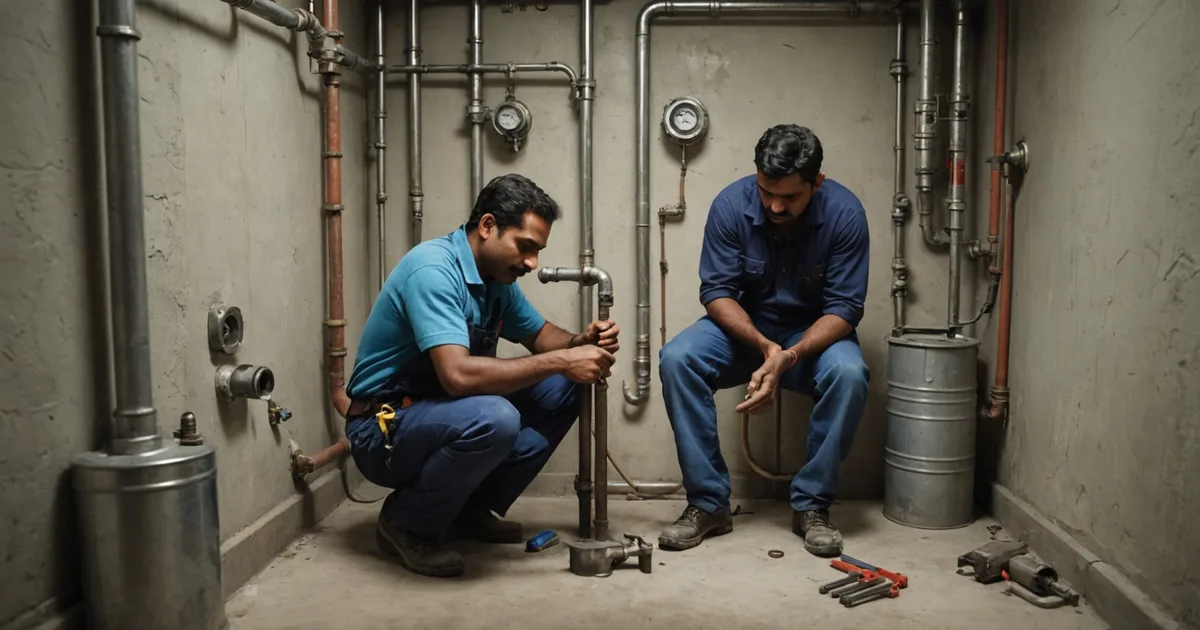
A resident reports, "there's a problem with my toilet." The manager books a plumber for the next morning. The plumber finds a broken flush valve, but brought parts for a clog. The issue remains, the resident calls back, and the manager coordinates a second visit. The callback stems from missing triage, not an incompetent plumber.
Here, triage means gathering enough information to assign the right vendor and set accurate expectations with the vendor and resident before the visit.
The information a good triage step captures
A maintenance request needs four pieces of information before a vendor can be booked with low callback risk.
First is category: plumbing, electrical, structural, carpentry, appliance, common area, intercom, HVAC. Category determines the vendor type and whether that person can do the work. A wrong category creates an automatic return visit.
Second is scope. Is it a single-unit problem or a shared-system problem? Low water pressure in one unit might be local, or indicate a building-wide supply line pressure drop. Triage should determine which, because the fix and vendor differ.
Third is urgency. A burst pipe or no power to a flat differs from a squeaky door hinge or loose cabinet. Urgency should set scheduling priority and communication. A resident with an urgent request who hears nothing within two hours will call. Someone with a non-urgent request told to expect a slot within four working days will not.
Fourth is access logistics. Is the resident home during working hours? Is there a key with the property manager? Is there a pet in the flat? These details seem small, but access failures often waste vendor visits. A vendor at a locked flat logs the visit, creates a rescheduling cost, and triggers a complaint about the process, not the plumbing.
How triage breaks down in practice
Manual triage breaks down in two distinct ways.
The first is volume failure. When requests arrive faster than the manager can process them, triage gets shortened. The manager reads the message, guesses the category, and books the first available vendor. This works for clear requests and fails on ambiguous ones. Under volume pressure, abbreviated triage increases, and callbacks follow.
The second is keyword-matching failure. Experienced managers use shortcuts: "leak" means plumber, "no power" means electrician, "fan noise" means HVAC. These are often correct and efficient, but fail when a keyword does not predict the category: "the lights in the bathroom flicker when I use the shower" could involve electrical, plumbing and electrical, or a loose fitting in a damp environment. Keyword matching sends an electrician. Proper triage gathers more information first.
AI-assisted triage addresses both failures. It processes the full request instead of selecting a keyword, catching more false-positive category assignments. It also scales consistently across volume, so triage quality does not decline at 9am on a Monday morning as human triage quality can.
What triage does not need to solve
A good triage process does not resolve every ambiguity before scheduling. Its goal is to reduce callbacks on scheduleable requests, not achieve perfect information before dispatching any vendor.
Some requests require an exploratory visit: an intermittent noise that occurs only at certain times, or a smell that appears sporadically. The right triage output is "dispatch for investigation, not repair," with the vendor briefed accordingly. The vendor should know they are diagnosing, not fixing, so they bring the right tools and set the right expectation.
This changes vendor behavior and resident expectation. A vendor arriving to "investigate and diagnose" has not failed by leaving without a repair. A vendor arriving to "fix the plumbing" and leaving without one has, in the resident's view, failed. The same visit is perceived differently because triage framed the work differently.
Setting expectations with residents as part of triage
Triage prepares the vendor and sets resident expectations. This is where many property management workflows leave value on the table.
When a request is triaged and a slot confirmed, the resident should receive three details: the assigned category, scheduled date, and what to expect. "A licensed electrician is scheduled for Tuesday between 10am and 12pm. They will assess the flickering circuit and advise on the repair timeline." This communication does more than scheduling alone.
It shows the request was understood, identifies the vendor type, and sets the visit outcome. It also removes a common callback trigger: a resident unsure whether the request was handled or when anyone is coming.
An operator told us during our early-access period: "After we started sending the triage summary to residents before the vendor visit, the follow-up calls almost stopped. Residents were still just as concerned, but stopped calling to check if we were handling it."
The cumulative pattern that makes triage discipline worth maintaining
Consistent triage has a compounding benefit that takes a few months to appear: vendor assignment data accurate enough for performance evaluation. If each work order has a clean category, correct vendor assignment, and resolution outcome, the manager can look back over six months and answer questions such as: Which vendor type generates the most return visits? Which building system generates the most requests? Which unit keeps generating requests despite repeat visits?
Messy intake data hides these patterns. Disciplined triage reveals them. Downstream gains, including better vendor roster management, targeted preventive maintenance, and earlier identification of recurring problems, make triage worthwhile beyond callback reduction. It shifts operations from individual requests to the patterns they reveal.